


Hyundai Hybrid vs. Gas vs. EVs

Comparing Hyundai SUV Options for Indianapolis Drivers
Sit in traffic on the north leg of I-465 for twenty minutes, and you’ll start doing fuel math in your head. Driving here throws a bit of everything at an SUV. You crawl near Keystone one day, then run wide open down I-65 the next. Hyundai builds three answers to that mix. Picking one comes down to how you spend your week.
- Gas models cost the least up front and keep ownership simple.
- Hybrids shine in city traffic, where the motor handles the crawling.
- An EV costs the least per mile if you can plug in at home.
Why Gas Models Still Fit Plenty of Hoosier Driveways
The 2026 Tucson starts at $29,450 in SE trim. Its 2.5L four-cylinder makes 187 horsepower and 178 lb-ft of torque, and power runs through an eight-speed automatic. EPA ratings come in at 25 city and 33 highway mpg with front-wheel drive. Add HTRAC all-wheel drive, and those figures shift to 24 and 30. That highway number holds up well on a Saturday run down to Brown County State Park.
Gas ownership stays familiar too. You fill up at any station along US-31, and you don’t think about cables or charging apps. That’s worth something if you road trip on short notice. The price of entry sits thousands below the electric version, too.
Where Hybrids Earn Their Keep Around Indy
Tucson Hybrid pricing opens at $32,450 on the Blue SE, and every hybrid trim comes with HTRAC all-wheel drive. A 1.6L turbo four teams up with an electric motor for 231 horsepower and 271 lb-ft. Blue SE earns EPA ratings of 38 mpg city, 38 highway, and 38 combined. Move up to SEL, SEL Convenience, or Limited, and those numbers read 36 city and 37 highway.
Rush hour is where that pays off. Creep past the Speedway on race weekend, and the gas engine shuts off while the battery takes over. No plug. No charging schedule. Your routine doesn’t change at all.
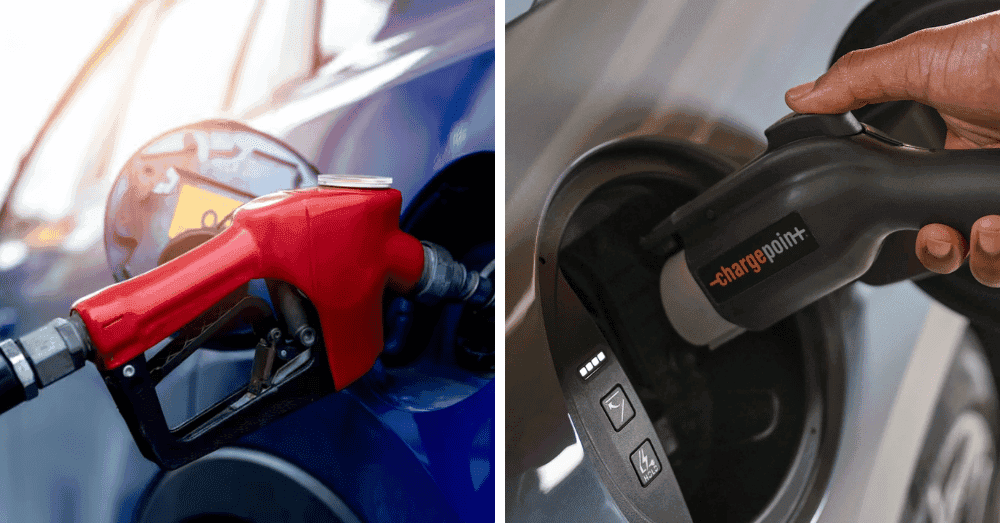
Going Electric in Central Indiana
Size-wise, it’s a fair fight. Tucson and IONIQ 5 both seat five and both sit in the compact crossover class. The 2026 IONIQ 5 opens at $35,000 for the SE Standard Range. That version pairs a 63 kWh battery with one rear motor rated at 168 horsepower, and Hyundai puts its range at 245 miles. Long-range rear-drive trims use an 84 kWh pack good for 318 miles. Dual-motor all-wheel-drive versions make 320 horsepower and 446 lb-ft, with EPA estimates from 259 to 290 miles by trim. Fast charging takes the big battery from 10 to 80 percent in about 20 minutes. A native NACS port means most public stations around Indy work without an adapter. Hyundai has published cargo figures for the IONIQ 5, which are 26.3 cu.ft. with the seats up and 58.5 cu.ft. with the seats folded, but you’ll probably still want to load your stroller or golf clubs in one before you sign, just to be certain.
Hyundai Hybrid vs. Gas vs. EVs at a Glance
| Category | Gas (2026 Tucson) | Hybrid (2026 Tucson Hybrid) | Electric (2026 IONIQ 5) |
|---|---|---|---|
| Starting MSRP | $29,450 (SE) | $32,450 (Blue SE) | $35,000 (SE Standard Range) |
| Power | 187 hp, 178 lb-ft | 231 hp, 271 lb-ft combined | 168 hp to 320 hp by trim |
| EPA Rating | 25/33 mpg FWD, 24/30 mpg AWD | 38/38 mpg AWD (Blue SE) | 245 to 318 miles per charge |
| Drivetrain | FWD standard, AWD available | HTRAC AWD standard | RWD or dual-motor AWD |
| Refueling | 14.3-gallon tank | 13.7-gallon tank, no plug needed | 10 to 80 percent in about 20 minutes |
| Cargo, rear seats up | 38.7 cu ft | 38.7 cu ft | Not published by Hyundai |
Matching the Powertrain to Your Weekly Miles
Sorting out Hyundai Hybrid vs. Gas vs. EVs comes down to your weekly miles. If your week runs heavy on surface streets and I-465, you’ll get your money back fastest with the hybrid. Long highway commuters who rarely idle can save up front with the gas Tucson. Own your driveway and plug in overnight? An IONIQ 5 turns your morning routine into a non-event.
Frequently Asked Questions
Does a hybrid make sense if I mostly drive around I-465?
Yes. Stop-and-go traffic is where the Tucson Hybrid does its best work. The motor handles low-speed crawling while the gas engine rests. Blue SE is rated at 38 mpg city against 24 mpg city for the gas Tucson with all-wheel drive.
How far can a 2026 IONIQ 5 go on one charge from Indianapolis?
Hyundai lists 318 miles for long-range rear-drive trims. That’s a round trip to Louisville with room to spare. SE Standard Range is rated at 245 miles, and the XRT with all-wheel drive is rated at 259 miles.
Do Indiana winters cut into electric driving range?
Cold weather cuts range in every EV, and a Hoosier January is no exception. Warming the cabin while the vehicle is still plugged in at home helps, and so does parking in a garage. Plan on charging more often from December through February.
Is there still a federal tax credit on a new Hyundai EV?
No. The federal purchase credit for new electric vehicles ended for vehicles acquired after September 30, 2025. Compare sticker prices as they stand today instead of counting on a rebate.
Compare All Three Powertrains at Ray Skillman Southside Hyundai
Spec sheets only take you so far. At our Greenwood store, we keep gas, hybrid, and electric models on the lot so you can drive them back-to-back on the roads you use every day. Take a Tucson down US-31, then switch to an IONIQ 5 and feel the difference for yourself. We’ll talk through home charging, trim differences, and what your current ride is worth on trade. Browse our inventory online, then come see us and we’ll get the keys in your hand.
0 comment(s) so far on Hyundai Hybrid vs. Gas vs. EVs